

When Inna heard that TikTok was created by the Chinese, she said she had known all along that that stupid thing was the stuff of strong tsafi. Such magic could only be expected from the spirits of sin, the end of the world, and that they had possessed her daughter. That was even before I met the bandit on TikTok, before anything happened.
Inna had always been against my social media life. She berated me when she saw me creating content. In my early days as a TikToker, I could hardly create without her voice coming in to intrude, shouting my name. Shatu. Shatu. You’ve started your business. It was worse than the bleating of goats entering my video and spoiling things, or the good-for-nothing brats of Lanto when they started their fights, and their ugly cries crashed my video. Now, I bribed them to go outside to play, and when Inna had gone to the debtors, I had perfect silence to sit in the corner I had painted just so I could have a beautiful background to make my videos. The sun faced that angle, and when I used those filters, I immediately was transformed to an angel. I loved how the filter made my eyes clearer, dreamy, and my lips luscious, moving gracefully to the lyrics of a Hausa song. Wayyo dadi, I was such a beauty.
There was a time we were doing this trend on TikTok. It was done at night, where you took some parts in darkness and some in light. I made up my face in funny makeup with too much powder and dotted khol all over. I had Suwaiba turn on and off the torchlight for me while I zombied my head.
Inna, who was coming back just then into the house, was scared to death. She gasped and said the salat in a voice so frightened that I was also scared. What madness is this, Shatu? She shouted. I told her to calm down. I showed her it was just a video I was creating, and I showed her when I matched the background song, a Fulani mime that was so entrancing, matching my zombie movements. Inna wasn’t impressed. She slapped my hand, and my Infinix Smart 8, with the three huge cameras, almost fell. She ranted all night about how I was conjuring for myself more djinns in addition to the ones I already had by doing those crazy movements at night, and so close to the latrine. Was I mad? When would I ever grow some sense? She asked.
Inna could never go beyond those ramblings and empty threats. She was hurt by what the women in the village said, that she had spoiled me, that I had passed the age of marriage, and that I probably did prostitution when I went to Mada. She pleaded in a quiet voice that I bring a man to stop the whispers. I was hurt that she was hurt, but I couldn’t do anything. I decided to put on a show that would stop the talk.
I went to Umma Mai Koko’s compound, the federal capital territory of all gossip in the village. I shouted that day. I asked the women in her compound, her minions, to come out and prove I followed men in the city. Even if I did, did I borrow any of their cunts? They all kept silent behind their curtains. I insulted them and their jobless husbands. When the sharp-mouthed Kulu dared to answer me, I shut her off by reminding her that her husband was an informant for the bandits. Which could be more shameful? She kept quiet, and quietly sneaked back to her room. Everyone in the village was afraid to voice the obvious, as though it wasn’t really her husband who informed the bandits when Alhaji Lawali earned millions from the cattle he sold, which he had inherited from his grandfather. The bandits came that night and took all the money. Alhaji Lawali became sick in the head from that day.
The village women were jealous that I was better than their children. I didn’t get married to wife-beaters like Uwani and Sahura’s daughters — in fact, which man in our village didn’t beat his wife? — or husbands who abandoned them like Basira and Lulu’s daughters. They lied that their husbands had gone to Lagos or Cotonou to hustle, but who went years without coming back to their wives.
All they did was gossip. Gossip all day. I was very happy when Kawu’s widow reported them to the bandits when they said she was a witch and accused her of killing her late husband. The bandits who now administered our villages charged them huge amounts. I hated the bandits, but I was glad they taught these women a lesson.
Anyway, that was their problem. I didn’t have time for them. I had my phone and my TikTok. I was educated, unlike them. I could read in Hausa, and some English words could roll off my tongue, too.
Followers. Comments. Live. Profile. Views. Filters. Trending.
Inna wouldn’t understand, no matter how I explained. I had more than five thousand followers. I couldn’t even read the number of likes I had. So many. Hundreds of thousands. Can you imagine me, this village girl, having so many followers, so many likers of my videos? Sagir, my friend at the market in Gusau, told me that they may even start paying me soon on that app because I added value to their platform. I was surprised that TikTok paid people with so many likes.
But my own wasn’t even the money, alhamdulilah. I was a businesswoman and took care of my needs and those of my family. I wanted more and more followers. The first time I uttered this dream, it was slapped off my mouth by Inna. I wanted the directors in Kano to notice my beauty or talent or both and put me in a Kannywood film. This dream bloomed in a secret corner in my heart of hearts.
We had this argument with Sagir and his friend the other day. He said Kannywood actors were now no better than TikTokers. He called us jaruman TikTok, TikTok actors, and I was proud of being addressed as an actress. I disagreed, however, even though he had a point when he said that TikTokers like Murja had more followers than the biggest of Kannywood stars, and very soon we TikTokers would reach that social relevance level where our influence would matter in politics. Already, we were doing business adverts.
I disagreed, but couldn’t argue with him. How could I express how limiting TikTok was as an outlet for the creative expression I craved? I wanted cinema. Even though I could pretend that I was an actor, because I acted small-small comedies on TikTok and was excellent at jumping on trends that required acting skills, I was still unsatisfied.
Back then, when I went to Kano, I would have that thought in me to go to Zoo Road, where I heard the directors and producers stayed, and joined them instead of going to the market. Something always stopped me. I was ashamed to accept both — that I was scared of society, and also that the directors might find me useless as a villager, uneducated, and all. You could call me anything but ugly. This I was sure of, and it made me a little happy.
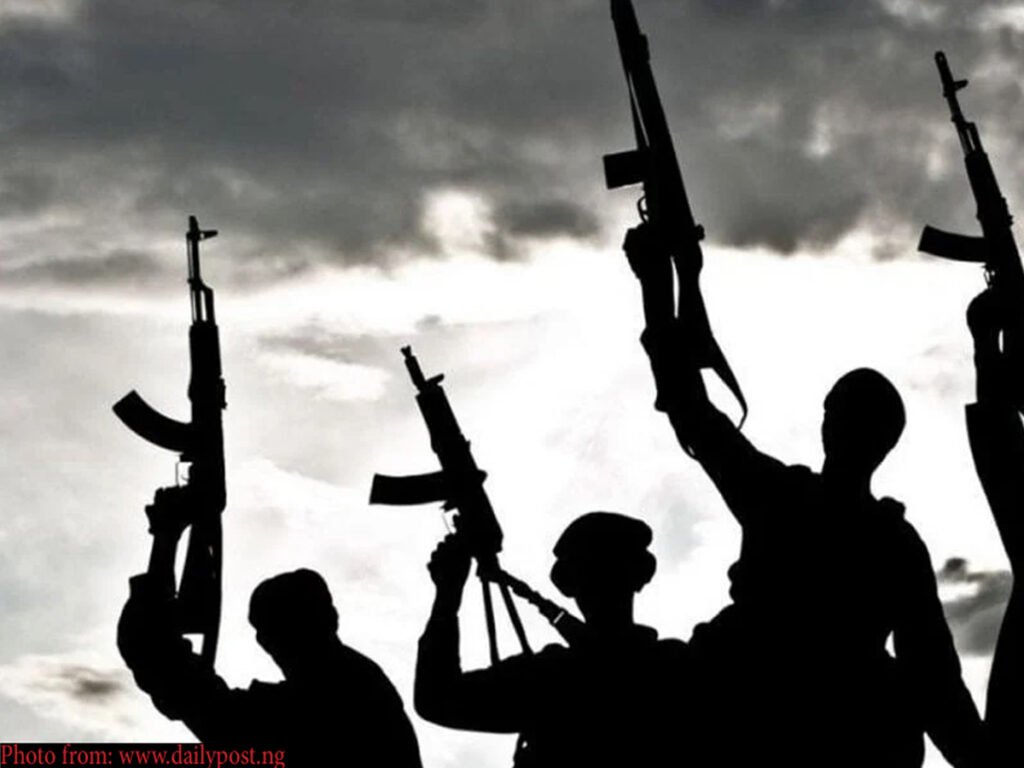
Everything changed when the winds of misfortune blew the bandit’s video my way. I was lying in bed when I saw the video — a bandit sitting under a tree and showing off wads of cash while others cheered. So much money that I had never seen. My jaw dropped. I almost fell off the bed. Their laughter grated on me. I had never thought their audacity and brazenness had reached this level. Was it not enough that these guys had taken control of many villages, and the government watched them collect taxes and hold courts? They burned down villages, kidnapped travellers and students. Just last month, we heard Turji, their leader, had shot down a whole military helicopter.
But to be showing off their money on TikTok for the world to see? To even have a TikTok page? I couldn’t believe it.
I believed it was the wind that made me swipe to see the full page of the account. The profile wasn’t named, not that I expected the illiterates to know how to do this media thing. I saw a few more videos they had posted. In all the videos, they were playing with money. People’s money. Blood money. The videos had many-many views. Clouds gathered in my head. I was angry that these people were let to be. They saw these people and let them continue killing and destroying lives.
The next morning, I woke up to a notification that sent my heart racing — the bandit’s account had viewed my own account. Fear gathered in my bones. But then I calmed myself down. What was the alarm for? What night had the bat not seen? I thought
I saw these bandits every Thursday, which was the day we could enter the capital escorted by two military jeeps. They had a pact with men in our village that our taxes would be paid unfailingly, and every farmer got a permit first before entering his farm, this way the bandits wouldn’t attack us. Sometimes, they came at night to demand money. Apart from Asabe’s granddaughter, none of the women in our village had the misfortune of being taken by the bandits. Compared to other villages that were razed, women raped before their parents, men killed, we were living in paradise.
So, I allayed my fears. But I became concerned when, that night, while I was watching TikTok videos with the children and women in our compound, I received another notification that the bandit’s account visited my profile again. I was afraid, as if it were our compound they visited. I quickly switched off my data. My fellow TikTok viewers were surprised that I had ended our entertainment earlier than usual. I went to bed muttering prayers.
The next day it happened. And the next. Always at night, the account would visit my page. For the next five days, fear wrapped itself around me. The thing that gave me the greatest joy wasn’t making me happy anymore. I scrolled on TikTok infrequently. I didn’t create any content. I resolved that when I get to the capital the next market day, I would ask Sagir to block the bandit’s account.
…
Thursday. The whole village was all sounds and fury. It was only two trucks going to the capital. I always left in Sale’s. I carried lalle to drop off at the park for delivery to the woman I did business with in Kano, and I picked up my supplies from her. The trucks were filled with women and their loads.
There was a time we could go to the capital at any time of the day. Now we’re confined to Thursdays only. That was because from beyond Nahuce, the bandits had a stronghold, and they were merciless. There was a time they set a truck on fire. To go to the capital, you had to pass where they stayed. Every Thursday, soldiers came to accompany our truck to and fro.
At the bandit’s outpost outside our village, the truck parked. The bandits on patrol, a trio, walked up to us. One went to our driver to collect the bribe while the two other came to inspect us like road safety officers. I cursed the cursed donkeys under my breath. One of the bandits came closer to where I was seated. Our eyes met. I looked down. He came closer and eyed me.
When he was so close I could feel the heat of his breath on my face, he said, “You look familiar.”
I said nothing.
He asked me to come down.
I came down, trying to mask the fear in my eyes. Tension brewed in my stomach.
“It seems like I know you,” he said.
His Hausa was made fragile by a Fulfulde tongue.
I raised my head and, for the first time, really looked at him. His complexion, obviously once on the fair side, now looked faded, sunburnt. His nose stood firm and long. His lips were chapped. His eyes were dirty. He had a thin tribal mark.
I shrugged, then a voice in my head warned me to be careful with this man who held the power of life and death in his hands.
“Me? I don’t—”
“Yes,” he said triumphantly. “I saw you on TikTok.”
And then, I understood. He was the bandit visiting my TikTok account. But he wasn’t one of those in the video I saw.
“Shatoun Inna,” he called.
That was my TikTok’s profile name. Instinctively, I answered.
For a moment, there was silence. The passengers in the truck looked on, some straining their gazes, the older women squinting.
“I want us to talk about something serious,” he said.
We moved a bit farther away from the truck. I folded my hands and told him I was listening. He seemed lost for words a bit. He shifted his rifle from one shoulder to another. His body was scrawny.
“You’re from Nahuce?” he asked.
I nodded, wondering where this was leaded.
“Do you understand? Since I saw you on TikTok, I…”
I understood. I was sorry for this young man who had no language for what he was feeling. He was obviously frustrated that a force stronger than his gun was making him fiddle and stammer.
“I want to marry you. That’s it,” he said.
I almost laughed. How could I tell this young man that I was probably older than him? That two of my younger sisters were married, each with kids? If I finally decided to marry, I would marry a man from the city. And it had to be a huge man, somebody way older and with a sturdy body and a face full of beards. I had never liked boys.
“But you’ve to stop all this TikTok posting. Do you understand? My wife can’t be showing her face to the world.”
“And you’ve to stop this banditry. My husband can’t be killing and—”
My tongue was a loose thing. Inna always said the tongue could strangle you. I found it hard restraining my tongue.
He looked at me, opened his mouth and closed it. He was wordless at my audacity. I always trusted my instincts and what they told me this Thursday morning was that this was a man in love, this was a harmless man or at least he wouldn’t harm me. For the meantime.
I stared at him in his dumbfounded silence.
“I’ve to go to the market,” I said.
“Okay. When you come back, we’ll talk, kin gane? I’ll be waiting for you.”
Our trucks continued to the bigger village of Kabuke where the soldiers were waiting. The roads that joined Kabuke to the capital needed military escorts because the bandits there were merciless. The ones around our villages were little bastards compared to these ones. We had become tired of wondering why the soldiers, since they knew the bandits’ hideouts, couldn’t go and fight them. Our village existed like it wasn’t part of Nigeria.
…
At Gusau market, I sat in the cool interior of the cashier’s place in Sagir’s shop. I had a chilled bottle of Fanta. Sagir was talking to me, but my attention was elsewhere. I was thinking of taking my mother from the village and moving here to the city. There was no way I could marry that young killer.
Sagir’s uncle, the owner of this shop, wanted to marry me. He had been kind to me. He bought me the phone I was using, brought supplies from Kano for me. He did his without charging me. I used to go to Kano myself to buy goods, and it was on the way back on one such visit that I met him. He spared me the goings and comings, the delivery charges. Despite his generosity, his promise of a decent life and his solid body, I didn’t want to be a third wife. But now, as I sat in his shop, I was thinking of accepting if it would save me.
Deep down, my heart was bitter. Why couldn’t I have the freedom to be what I wanted to be?
When I was younger, I was a different person. I knew I was destined for greatness. Somehow, knew I needed to prepare for that moment. One of them was education and exposure. An eight-year-old me clung to Aunty Sadiya’s legs when she came visiting, crying that I be let to follow her so she could put me in a school. My father protested. Inna begged. I cried while Aunty Sadiya convinced them. I left the village that day and was enrolled in school. In primary five, where I had managed to learn how to read and write my native Hausa and a spoonful of English.
When my aunt’s husband was transferred to Kaduna, I was returned to the village and all my dreams dashed. The moment I returned, talks of marriage began. I swore I wouldn’t get married that young. I stood my ground. Inna took sides with me. When my father died two years later, I had no one to fear and submit to.
The years that followed saw the marriage of all my agemates. Then my younger sisters. I started a business, following Hajiya Uwani to Kano. My hands were blessed. My business prospered rapidly. I traded in everything from groundnut oil to gwanjo clothes. Money earned you independence. So, I took it seriously. There was a time when I was hitting the road to Kano twice a week. Then the virus came, and everything stopped. Business and movement stopped. At that time, I had a smartphone. Out of boredom, I discovered TikTok. The rest was history.
…
As he said, the bandit was standing at the outpost. When I came down, he waved the driver to go. Before I could utter a word of protest, he had driven away. The sun was nowhere to be seen, the sky abounded in indigo and orange lights. The forests around us wore an unearthly glow. My village was a thirty-minute drive away.
“How can I go back to the village now?” I asked him.
“I’ll take you back.”
I sighed. To him it might sound like one of frustration, but for me it was one of massive relief. I had feared he would take me to the forests and forcibly marry me. But still I was nervous.
“Let’s continue our conversation.”
“I’m listening.”
“About the marriage.”
“What about it?”
He was lost for words, then said, “Agree to marry me.”
He was asking. My consent was needed. This one was a gentleman.
“Please, just take me home.”
“Please, answer me.”
I realised that I could have my way with this man. He was malleable. And he was naive when it came to women and our mystery. I decided to play him, the TikToker and actress that I was.
“What’s your name?”
“Yusuf.”
I softened my voice to a pleasing, pleading tone. “Yusuf, please take me home. Inna would be worried dead.”
I could see the effect instantly. He looked about and said he would go and bring his bike right away. I knew that this power I could only exercise in this tentative period where I filled his head with possibilities of requiting his love. I knew that there was a thin line between love and hate, as they said. This savage could turn on me if I overstepped bounds.
Perched on the bandit’s bike, I was overwhelmed by dark thoughts. Many women like me had been forcefully taken away to their deaths on this very bike. As the skies darkened while the winds whispered in our ears, I made up my mind that I would plan our runaway immediately when I got home. The hills of my village loomed before us.
I asked him to drop me off at the start of the village. He said he would come back tomorrow.
I entered the house to find Inna crying inconsolably. She was told I had been kidnapped. When she saw me, she hugged me as if she couldn’t believe that it was truly me.
…
It was sugarcane season. Nahuce was carpeted by sugarcane husks in every alley. Tall sticks of sugarcane stand at every angle, making it hard to believe the intense competition in the sugarcane business could allowed the sellers to make a reasonable profit. The men in our village sat under shades, eating stick after stick while they gossiped as usual, lying like the remains of war while high on the sweetness of sugarcane.
Yusuf began coming. Once again, I was on everyone’s lips in the village. But it was in whispers. No one dared to openly discuss me, at best. Or the bandit, at worst.
Yusuf came with his friend, perched on their Boska motorcycle immediately after the Magrib prayer. His friend sat on the motorcycle to wait while he walked to me under the bedi tree outside our house. He told me that their kingpin had ordered all his boys to bring forth wives so that he could organise mass weddings to reduce the rate of rape by the bandits. He said the new kingpin was pious and generous.
Yusuf was the only one who was yet to bring a wife. He almost settled for one of the abducted girls until finally he saw me on TikTok. You know me now, I couldn’t keep my mouth shut. I told him that what they were doing was evil, that their kingpin wasn’t pious. That he would, in fact, lead them all to hell.
He once again absorbed the shock, then began a long rambling talk: They weren’t bad people, they just picked up arms to defend themselves against the police and the vigilantee groups killing them. When he talked about his Baffa that was killed and his cattle taken away, his voice quaked. He repeated that their new commander was a man of God and would soon start giving out money to people.
Life took on an urgency. I was surprised by how time slowed, the hours lingering. But my heart was beating faster. I was restless and counted the hours to next Thursday when I would take Inna to the city from where we would run away.
Then, on Friday, he told me that I should come to their hideout, that he wanted to introduce me to their commander.
“I’ll come and pick you up around 12. Be ready,” he said.
And, without waiting for my protest, he left with his friend.
It annoyed me greatly that I had no choice. I didn’t know what to expect from the introduction but I knew enough by now to not expect anything funny from their own part. I thought of pretending to be sick on that Friday to cancel the plans, but when he arrived, I pulled on my abaya and, with a knotted stomach, walked out. Inna whispered in my ear instructions to pray.
He was dressed smartly in a new military khaki. His friend wasn’t with him. I climbed his bike for the second time since the first time we met, and we rode away.
I had never been to their hideout. I only knew it lurked somewhere in the forests beyond Mararraba. When we began the ride off the bridge, cutting through the paths of the forests, my heartbeat increased so rapidly that it felt as if my heart was seeking escape from a cage.
There was a lot of activity going on in the camp when we arrived — women cooking, bandits patrolling, animals grazing and bleating. There were huts and a brick building that wasn’t cemented. I noticed the car right away, a Hilux that was dusty and muddy, as if it had been driven through swamps.
The kingpin was seated outside one of the huts, a man kneeling before him as he extended a recorder. A cameraman stood before his tripod filming them.
“Commander is having an interview. Let’s wait.”
Yusuf took me to one of the rooms which had only a mat and some Bacco bags. The windows were blocked with sacks, making the room a bit dim.
“Teach me how to do live videos,” Yusuf said as he brought out his phone. “We want to share money to people on TikTok.”
I thought I had seen it all.
I showed him how. He was a fast learner. But I told him he needed to download the actual TikTok, not TikTok Lite. He asked me to do so, then excused himself. Alone in the room, as I waited for the app to download in the slow network, I swiped to his gallery. It was their pictures in the camp and some other videos.
I clicked on one video. There was a helicopter, its whirr was the only sound. Then two white men, the bandit kingpin and a vaguely familiar face. I paused the video on the face. It was a famous politician in the ruling party. The actors in the video were discussing as boxes were brought out from the helicopter. My heart began racing. But I quickly entered Xender and sent all the videos to my phone. I prayed fervently for them to finish entering before Yusuf returned.
I heard him clearing his throat outside the tent. Even though I had transferred everything and cleared the evidence, I still jumped when he entered the room. I gave him back the phone, and he shoved it into his pocket. He said that the commander had retreated to his space after the interview and wouldn’t see me today.
I sighed.
Yusuf told me that he had arranged with the journalists to take me back to the village in their car as he had work to do. He would bring me back to meet the commander tomorrow. He saw me to their car, the Hilux. There was a driver, the big journalist in the front seat. I joined the one I saw taking video of the interview in the backseat.
The car started, and we reversed. When we eased out of the woods, the journalist in front turned to look at me. He was middle-aged. Obviously a big man. I wondered why he risked his life to come here to interview bandits.
“Sannu, malama,” he said to me.
I said hi back.
“I’m Abdulkadir, a journalist from Abuja.”
“Well done,” I said.
“Thank you, malama. Please, can I ask you a few questions?”
I hesitated before nodding.
“How are you related to these people… the bandits?”
I narrated everything to him, from A to Z.
“Do you wish to go ahead with the marriage?”
“Allah kiyaye,” I spurted. “God forbid.”
He was silent for a while.
“Can you please help my life?” I asked him.
“How, malama?”
“When we go to our village, can you help me take my mother to the capital. From there, we can escape these people.”
He hmmed. “But that’s risky, you know. You’re obviously a property of the bandit’s authority. Helping you escape can implicate me and destroy the rapport I’ve established with them for the course of my investigation here.”
I was angry. “So, you won’t help me?”
“Well, I’m sorry… But, I’ll see what I can do.”
I knew it was a lie, and had to act fast. “I’ve something in exchange for your help.”
As the car bumped, Abdulkadir turned and gave me a hungry attention.
“What?”
“I sent some videos from my bandit lover’s phone. I can share them with you when you help me and my mother escape.”
“What? What’s in the video? How do I know you’re not lying?”
I fished my phone from my handbag. I played one of the videos and showed him a glimpse. The other journalist next to me gasped. His boss began sweating. Then I pressed the power-off button. I felt high, important, but scared. My heart was beating very fast.
“Innalilahi. We’re all mad in this country,” he said, his voice barely a whisper.
He turned to look out the window, then back at the road we had just travelled. His hand gripped the headrest.
“This is worth the risk,” he said, though his voice shook slightly. “But we’ll have to leave immediately. Once they discover you’re gone…”
He trailed off, wiping his forehead again.
“The bandit will know we took you,” he continued. “We can’t stay in the area. Not even for a day.”
The driver glanced at him through the rearview mirror, and I saw fear pass between them.
“We’ll definitely take you and your mother,” Abdulkadir continued, his words coming faster now.
He wiped his forehead. I smiled.
“Let me see the video, please.”
“No,” I said firmly. “I’ll transfer it to your phone when I get to Gusau.”
“Of course, malama. We wouldn’t only take you to Gusau. We’ll pay you for the videos.”
I leaned back on the seat and closed my eyes. My heart was pounding. My whole body shook when we reached the village. I dashed into the house and asked Inna to follow me.
She looked up from where she sat, confused. “Follow you where?”
“We’re leaving. Now. Pack what you can carry.”
Her face went blank, then fear crept into her eyes. “Leaving? Shatu, what are you talking about?”
“Please, Inna. Please just trust me. We’ve to go now.”
She stood slowly, looking around our compound as if seeing it for the first time. Her gaze lingered on the corner where I filmed my videos, then moved to the cooking area where she had made breakfast that morning.
“Your sisters,” she said, her voice cracking. “Ramatu and Asiya. I can’t just leave them.”
“We’ll send for them,” I cut in, grabbing her hand. “I promise you, Inna. Once we’re safe, we’ll send for them. But, right now, if we don’t leave, I…”
She searched my face and must have seen the terror I had been holding back all day.
Her shoulders sagged. “What have you done, Shatu?”
“Something that’ll save us. Or kill us. I don’t know yet.”
She closed her eyes and whispered a prayer, then opened them with a quiet resolve.
“I’m ready,” she said. “Let me get my hijab.”
We moved quickly, throwing clothes into bags. At the doorway, she paused and looked back one last time. I saw her lips move in a silent goodbye to the home she had lived in for years, to the friends she had gossiped with every evening, to the life she knew. Then she turned to me, took my hand, and stepped outside.
We were all silent in the car as we passed the bandit’s checkpoints where the journalist’s pass allowed us free passage. He gave them generous tips. We kept silent as the car sped.
When we sighted Kwatarkwashi hills closer to Gusau, I breathed the deepest sigh.
Mujahid Ameen Lilo is a Nigerian-Hausa creative writer and storyteller. He studied English Language at Ahmadu Bello University, Zaria. His writing has been supported with residencies and fellowships by the Wole Soyinka Foundation, Hilltop Creative Arts Foundation, Ebedi International Writers Residency, and the Open Arts Development Foundation. Lilo edits for The Nigeria Review and reads prose for MAAR Review. He won the Wole Soyinka Essay Competition 2019, The Nigeria Prize for Teen Authors 2020, and was shortlisted for the Aminiya Trust Hausa Short Story Contest 2022. He was a finalist in the Quramo Writers’ Prize 2023. His works have been published in The Lagos Review, The Nigeria Review, Daily Trust, A Long House and others. He is working on a novel.