

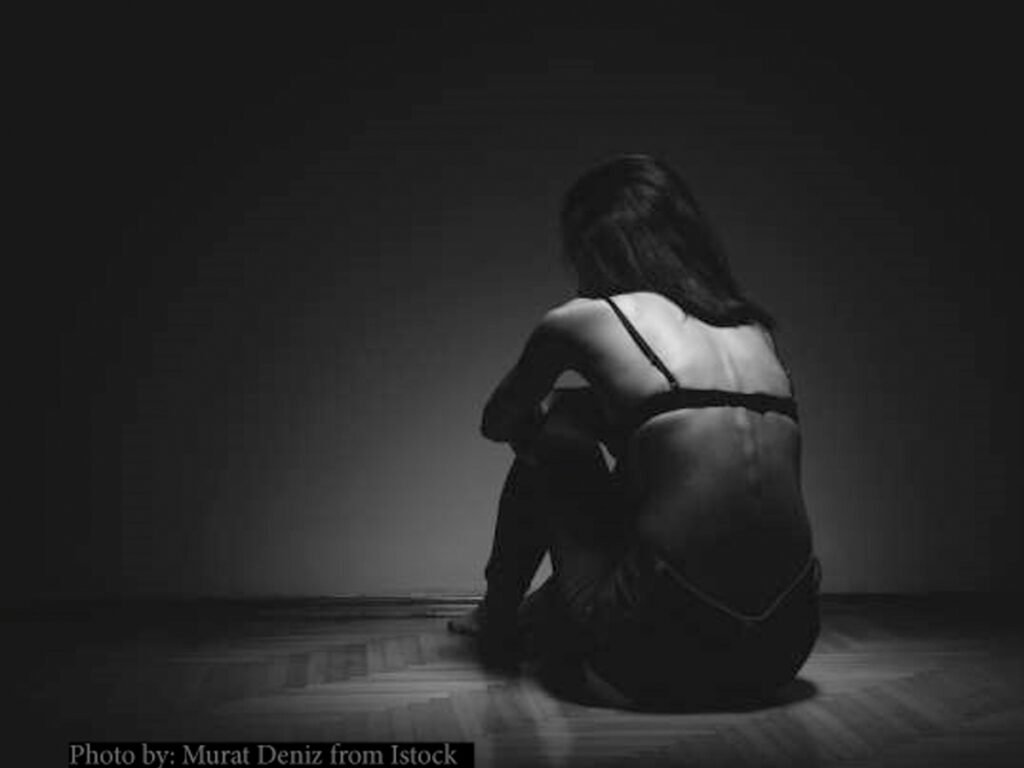
The harm done to Olanna wasn’t only to her body but to her world. A world already fragile, small, shaped by the kind of innocence that only thirteen-year-olds carry with them like a precious lantern.
No one in Umunze, her small community on the outskirts of Abia State, imagined that danger could ever come from within the walls of a safe home. Danger, they believed, lived on the streets, in the dark, in places children were warned never to wander.
Olanna’s days were simple. She woke early to sweep the compound, carefully prepared her uniform, and walked with her younger siblings to school, sometimes humming the new songs she had learned from the assembly choir. She loved stories — the ones her grandmother told at night and the ones she read from borrowed textbooks. She dreamed of becoming a nurse one day, someone who healed people, who brought relief.
Her uncle, Chukwudi, had moved in with them two months earlier after losing his job in Port Harcourt. With each passing day, since his arrival, Olanna didn’t understand the weight of the discomfort she felt around him. The way her stomach tightened when she heard his footsteps, the way her heart quickened when he called her name, the way she avoided being alone in the same room with him. In their house, adults weren’t questioned. So, she tried to brush it off, convincing herself she was imagining things.
One day, Olanna was inside, folding clothes. The rain had just begun to fall. Her mother had gone to the market. The younger children were at a neighbour’s house. She remembered the room dimming, the scent of damp air, and the sound of the door closing behind her. Her voice failed her, not because she didn’t want to scream, but because betrayal stole her voice before it stole her entire being.
When it was over, she felt herself shrinking, becoming smaller than her own shadow. That shrinking followed her for days. She stopped singing. She avoided mirrors. She avoided sleep.
Her mother noticed. But Olanna’s eyes refused to reveal anything. Her lips couldn’t form the words.
…
Mrs Eze, Olanna’s civic education teacher, was the kind of woman who noticed small things. The way a child walked into the classroom. The way their shoulders slumped or straightened. The way their voices fluctuated. She noticed that Olanna had stopped answering questions, even the easy ones. How her hands trembled when she passed her exercise book. How she startled at sudden sounds.
One Wednesday afternoon, after the bell rang and pupils rushed out of the classroom like a restless river, she called Olanna back.
“Olanna, bịa. Come.” Her voice was soft but firm. “Stay a moment.”
The girl froze, her bag clutched against her chest. Her eyes carried a weight older than her age. She trudged, as though each step cost her something.
“My dear, is everything all right at home?”
Olanna stared at her shoes.
Mrs Eze waited. She had learned over the years that children sometimes needed assurance that the air around them was safe.
Olanna shook her head and mumbled, “I’m fine, aunty.”
Her teacher took a deep breath. “If you ever need to talk, I’m here.”
Olanna nodded.
That night, her mother, Nneka, found her awake at 2 a.m., sitting on the floor, shivering, her knees pulled to her chest.
“Olanna, gịnị mere? What happened?” Nneka asked as she sat beside her.
The girl’s tears flowed like a river. She clung to her mother, unable to speak, unable to breathe through the heavy sobs.
“Talk to me, my child.”
But the words lodged in her throat. She could only cry until exhaustion pulled her into sleep.
Her mother tossed and turned all night. By morning, she was convinced it was something spiritual, an attack, an oppression. She took Olanna to prayer houses, to women who promised cleansing, to pastors who offered loud prayers and cups of anointing oil. But the girl only grew quieter.
A week later, one early Tuesday morning, as Olanna swept the compound before school, she saw her uncle approaching. Her hands froze. The broom slipped from her fingers. Something in the way she flinched caught her mother’s eye.
Why are you shaking like that?”
Olanna’s chest heaved.
“Did he beat you? Did your uncle shout at you?”
Olanna shook her head violently.
Nneka looked from the girl to her brother-in-law. Something eerie began to form in her mind like a storm cloud.
“Olanna, what did he do to you?”
Olanna couldn’t speak.
Nneka’s eyes, wide with worry, searched her face. She had noticed the subtle signs for weeks, convincing herself that it was only the awkwardness of adolescence. She had done nothing but pray.
When the day’s chores ended and the house was quiet, Nneka decided to act. The next day, without explanation, she led her daughter to the gate of a small white church. The pastor, Reverend Amadi, greeted them with a wide smile. She introduced Olanna briefly and left her in his care, speaking quietly of “spiritual cleansing” and “prayers for protection.”
Inside the church, Olanna felt a chill. Reverend Amadi’s voice was soothing, yet there was tension in the air. He made her kneel, recite passages she barely understood, and then asked her to stay after the service for a private prayer.
One day, when she was alone with the reverend, his hands lingered where they shouldn’t, and his whispers made her stomach twist. She tried to speak, to explain, but the weight of her mother’s unspoken rule — that she must obey, that she must be silent — froze her tongue. She couldn’t cry out, couldn’t call for help.
Outside, Nneka believed her daughter was safe. She prayed silently that the pastor’s prayers would cleanse her child’s spirit. Inside, Olanna was trapped between fear and betrayal.
For weeks, the pastor continued his act of spiritual cleansing. Her mother remained convinced she was doing all right. But each day, Olanna’s world shrank to the size of the church pews. When she returned from the church, she carried a reserve that no question could break, a heaviness that dulled her once-lively eyes.
…
Olanna moved through the weeks like someone half-awake, drifting through each day with a heaviness that clung to her small frame. She did her chores with mechanical obedience, avoiding corners where memories lurked. Nneka watched her with troubled eyes. She had convinced herself that the pastor’s prayers would break whatever chains held her daughter captive. And yet, every time Olanna returned from those private sessions at the church, something in her eyes dimmed.
One evening, after a long session in the pastor’s cramped office, Olanna returned home with her school bag pressed to her chest. She walked into the compound like someone bracing for the rain. Her mother noticed the stiffness in her steps, the way she avoided meeting anyone’s gaze.
“You’ll be fine,” she said softly. “These things are spiritual battles.”
Spiritual battles. That was what the pastor had called it, too. That she was “under attack,” that her “innocence needed cleansing,” that she had to “submit” to the healing process. Words that sounded holy, words that sounded like help. Yet, when spoken in that small, dim room, they carried a weight that made her shrink.
Olanna wanted to tell her mother everything, to shout the truth. But each time she opened her mouth, she saw fear flicker in her mother’s eyes. And the words retreated.
At school, her teachers grew increasingly concerned. Her handwriting, once neat and full of loops, had become almost unreadable. She no longer sat with her small group of friends who followed her around the playground. When they asked if she wanted to join their skipping games, she shook her head.
“Olanna, we miss you,” one of them said.
But she knew that missing someone didn’t heal them.
One Wednesday, during a group assignment, Olanna felt a sudden wave of dizziness. Her hands trembled. The room seemed to tilt. She blinked rapidly, trying to steady her breathing.
Mrs Eze approached and placed a hand on Olanna’s shoulder.
“My dear, are you alright?”
Olanna looked down, tears threatening to spill.
Mrs Eze guided her outside, away from the noise of the class, and sat with her under the mango tree.
“You don’t have to tell me everything,” the teacher pressed. “Just tell me if you are safe.”
Safe. Such a simple word. Olanna closed her eyes. A tear slipped down her cheek. And it was an answer enough.
…
After that afternoon, Mrs Eze no longer watched her from afar. She observed closely. But there were limits to what a teacher could do. Limits forged not by lack of compassion but by the weight of her own experiences.
The young divorcee had once tried to intervene in a similar situation many years ago, and it had cost her her marriage, her reputation, and nearly her job. The scars of that experience still lived in her memory. She wanted to protect Olanna, but feared being misunderstood again. So, she hovered at the edges, torn between courage and caution.
Olanna found unexpected refuge in someone. Daniel was a senior student in SS2. He mirrored everything her world wasn’t — calm, patient, and strangely observant. He sat under the almond tree every morning, reading novels and sketching figures in a small brown notebook. Olanna first noticed him when she dropped her books on the assembly ground. He helped her gather them, offering a small smile.
From that moment, something formed between them. They began sharing short conversations — slow at first, the way frightened creatures approach an open hand. He would ask about her classes, her interests. She would answer with half-smiles and half-sentences, but he never pushed. His presence felt safe, like a space untouched by the chaos of home and church.
One afternoon, while her classmates played noisily around the field, Daniel sat beside her on the empty bench near the science lab. He opened his notebook, revealing a sketch of a girl holding a lantern.
“This reminds me of you,” he said. “Someone trying to carry a light into dark places.”
The words pierced her. Tears pricked her eyes. She looked away.
“Hey,” he whispered. “You don’t have to hide from me.”
It was the first time anyone had said that. Slowly, painfully, she began to talk. Not everything at once. A tremble here, a whisper there. She told him about fear, about confusion, about not feeling safe. She didn’t mention names. She didn’t describe incidents.
He listened carefully. He never dismissed her feelings, never told her to pray, never blamed her loneliness.
“You’re not alone,” he told her. “Whatever happens, I’m here.”
For weeks, Daniel became her anchor. He walked her to class when she looked pale. He sat with her at the bus stop when she seemed afraid. He even intervened once when a boy shoved her near the corridor.
One day, Daniel asked her to meet him in the empty art room during break. He said he wanted to show her a new drawing. The art room was quiet. Dust floated in the air. He closed the door gently behind them. He smiled at her, a different kind of smile. He stepped closer, reached out, and brushed her shoulder with a hand that had once felt safe.
She flinched.
“Olanna,” he whispered. “You know I care about you, right?”
She flinched more.
“You tell me things you don’t tell anyone else.”
Her pulse quickened.
He moved closer. Her stomach tightened. A familiar fear returned.
“I… I need to go back to class.”
He shook his head. “You don’t have to be afraid of me. I’m not like them.”
Them. The word hung in the air.
When he reached for her wrist, not gently this time, something in her snapped.
She wanted to scream, but it sounded more like a whisper, “Please… don’t.”
What followed was the betrayal of a safe space. When it was over, she sat on the cold floor, knees pulled to her chest. She smelled the air around her to confirm if she was alive or not. But she was alive. She could feel her heartbeat, her broken spirit. Perhaps, not alive the way people who were alive were.
Daniel stood by the window, breathing heavily, avoiding her gaze.
“I’m sorry,” he muttered. “I didn’t mean for this to happen.”
Olanna left the room a few minutes after Daniel left. She walked through the corridors like a ghost. The world tilted again, just like before, as she headed home that evening.
…
After the incident in the art room, Olanna moved through each day with a different kind of spirit.
Her mother noticed, but built her own explanation of it.
“She’s under spiritual attack,” she insisted to neighbours and relatives. “These things happen to delicate girls. That’s why the pastor must keep praying for her.”
Then, her mother’s brother, Uncle Pius, returned from Onitsha to stay with them for a while. He arrived with loud jokes and a booming voice. The neighbours liked him. The children greeted him cheerfully.
Olanna felt unease the first night he arrived. She sensed danger the way small animals sense a shift in the wind before a storm. She avoided him, leaving rooms the moment he entered, keeping her distance during meals, retreating to her corner of the house like a frightened shadow.
One evening, when her mother went for a women’s fellowship meeting, Uncle Pius called Olanna to help him with something. The tone was too familiar. The smile too knowing.
She shook her head, stepping back. “I… I’m busy.”
“With what?” he laughed. “You children think you can refuse elders? Come here.”
The command in his voice froze her. She stood rigid, trembling, staring at the floor. What happened next was a shift in the room’s air, a closing of distance, a taking of what wasn’t offered. When it was over, Uncle Pius simply adjusted his shirt and told her not to misbehave again.
That night, Olanna curled into the smallest shape her body could form. Her breath came in quiet bursts. The room felt like it was slowly collapsing inward. She watched shadows crawl across the ceiling, her heart pounding.
She heard the door open. Nneka entered the room, carrying anointing oil and incense.
“You’re awake?” she said.
Olanna didn’t answer.
Her mother sat beside her, smoothing her hair with a gentleness that once brought comfort.
“My daughter,” she said softly, “You must be strong. You mustn’t let the devil use your weaknesses.”
Olanna blinked, her throat tightening. “Mama, why don’t you protect me?”
Nneka stiffened. “Protect you from what?”
Olanna looked at her, eyes wet, voice cracking. “You know.”
Her mother’s face and colour changed. She looked away. “These things… I’m doing what I can.”
Nneka rose and left the room. The door closed quietly behind her, sealing the darkness back into place.
From that night onward, Olanna no longer cried. Crying required hope that someone would hear, someone would comfort, someone would intervene.
The only person who noticed the deeper shift was Mrs Eze.
“Olanna,” her voice trembled, “you’re withdrawing from the world. I’m worried.”
Olanna looked at her for a long time. The answer formed in her chest — heavy, painful, desperate to be freed. But it never reached her lips.
Two months later, Olanna noticed that her taciturnity had gradually transformed into something darker, slowly formed like a stone hardening in the earth. She began to watch her uncle, Chukwudi. She watched the way he walked through the compound, the way he laughed loudly with neighbours, the way he strutted with careless confidence.
Then a thought began whispering inside her every night before she slept: If no one must save you, you must save yourself.
…
After months of silence, Olanna now looked almost unrecognisable to those who had once known her. She didn’t want to be seen. The world no longer seemed like a big, open space, but a place as small as her heart.
Sometimes, she looked at herself and wondered if she was alive. They said she was possessed. Perhaps, being possessed meant being dead. Or she had been forgotten by God. She was cursed, she had come to believe, like her mother and the pastor believed. She was a nobody, she thought. A flesh to devour. She had peeled and peeled, and grown smaller, without a soul of her own, without a knowledge of herself and the world around her.
Each time she thought about this, her heart went numb, her mind wandered to spaces she couldn’t fathom. She didn’t know what to doubt, who to blame. She blamed herself most days. She rejected her body most days. Yet the men were still there. Yet the pain was there, growing in the shadows of her uncertainty.
Do something, a tiny voice she had been hearing and neglecting for weeks nudged her from within, from within herself that she had doubted, from within herself that was no longer hers.
Do something, the voice kept nudging with each passing day.
She didn’t know what to do. Everything had been done to her. What was there to do? She wondered. She had twice contemplated ending her body so that no man could have access to it anymore. But she doubted if anyone would cry for her or notice she was gone.
A few days later, when the voice pressed again and again, she felt her mind numb, her body cold like a corpse. She wasn’t living. She was only existing in the eyes of those who cared to notice, in the fantasies of men who had flattened her world with their weight.
Her mother and the pastor had assured her that it was the will of God that her body should be sacrificed. For weeks, she had asked the same God many questions, and no answer sufficed. For weeks, she had cried and doubted everything and everyone. For weeks, God hadn’t existed. Only men, quiescence, pain.
Do something.
Her mind was beginning to form thoughts, scary thoughts, but empowering. She needed some form of power to taste what it was like to live again, or pretend to live again. Someone small could still do something great, the voice pressed. She stared at her small hands and imagined what they could do against the great forces that had compressed her world into a small shell so hard to crack and recognise. But she had used those hands to slice onions today. To cut meat into fine pieces. To cut the grass in school.
In the last couple of days, she had been afraid of what her mind and hands could do, had been pushing her to do. When she slept, or when she pretended to sleep, when the whole house was dark and still, she looked at her hands, struggling not to yield to its growing strength.
Two nights ago, she had looked at her hands and what her mind was nudging her to do, and cried. She didn’t cry for herself. She cried for all she couldn’t understand, for all she didn’t know. She cried for tomorrow, if she ever saw it.
Do something.
That night, in the darkness of the house, where her old self had drowned, and her new self still existed, she decided to do something, something she wasn’t sure of, but something nonetheless.
…
Since the days following the day she decided to do something, she noticed she had changed in ways that she couldn’t explain. Perhaps her mother had noticed and thought she had been possessed by a new kind of spirit. The spirits weren’t the problem. She had reasoned that if the spirits could save her, or at least explain what was happening to her, what was going on in her head that wouldn’t go away, she would love them more.
She had decided that if there was no one to hear or see her, she would transform into the spirits or ghosts that had possessed her. Perhaps, she wasn’t possessed after all. Perhaps, she was the ghost all this time. The shadows she had avoided now felt like her companions. She had stopped hiding since no one saw ghosts. She had begun to laugh loudly since no one heard ghosts. She only saw and heard herself and her thoughts. She now moved differently, with a strange energy, the way ghosts did.
When her father returned from his months of work away from home, she didn’t see him as her father. All men were the same, and wanted the same thing. So, she greeted him with her nakedness. The man who had once protected her, now confused, slapped her and left for Abuja that same evening. He told her mother, almost in tears, before leaving, that if her daughter was possessed, it was her responsibility to fix it.
In the last few days, each night, when the house slept, Nneka would hear Olanna’s laughter in the house. At school, she had become a presence that her teachers warily approached.
It was during these weeks that Olanna became fully aware of the new power she carried — the ability to shock, to unsettle, the way ghosts did. She didn’t know what was happening to her. But she was glad something was happening. And, in that awareness, she began to plan, in the quiet corner of her mind, where no one could reach.
…
The night air smelled of rain and earth, heavy and suffocating, carrying with it all the tension of all the nights Olanna had spent awake. Tonight, she moved like a shadow in the house. Her uncle, Chukwudi, slept in the room at the far end of the hall. She paused at the threshold, listening. Every footstep, every whisper of the wind against the windows, sharpened her senses.
She entered his room, moving swiftly, her frame carrying a resolve that betrayed her age. She saw him lying there, oblivious, on the bed she had once slept on as a child. Fear was a stranger now. She acted. Her hand shook once. And then the silence she had carried for so long became a quiet scream, and with that scream, she stabbed her uncle in the chest. His scream wasn’t loud, and ended quickly.
She smiled in the stillness of the room. Outside, the wind had stopped. Inside, the house held its breath, the weight of many secrets pressing against the walls.
By the time the neighbours noticed and the police arrived, Olanna was sitting on the floor in the corridor, her body trembling, not from fear, but from the release of the storm she had carried for so long. She didn’t resist when they took her. She didn’t plead. Her silence, the one she had honed, the one she had used to survive, spoke volumes.
Her mother was frozen with fear. For a moment, mother and daughter looked at each other, and the silence between them was heavy with all they could have spoken before now.
“I tried…” her mother muttered in tears. “I thought…”
Olanna remained silent.
…
Mrs Eze visited her once while she was in custody.
“Olanna,” she said. “I wanted to help. But you were too far gone.”
Olanna’s eyes met hers. “I was never too far gone. You weren’t brave enough to fight for me.”
Alone now, behind the cold bars, she knew the only thing left was the truth. And, whatever the truth was, she needed more of it to make sense of life, even though it would cost Reverend Amadi, Daniel, and Uncle Pius something dear.
Grateful Ogunjebe is a Nigerian writer and journalist whose love for storytelling began at the age of five. From childhood, no storybook passed through her hands without being read, examined, and imagined beyond its pages. Her writing is inspired by human vulnerability and survival. She is a reporter with Naira Stories Magazine, and her work has been published in The Nation, News Direct, Naira Stories Magazine, New Africa Magazine, Health Science Blog, and Gistreel. Olanna is her first published short story.